
Circuit practice · zero to intermediate
Make the circuit tell you what is true.
Build ten low-voltage circuits from a blank Falstad canvas. Predict first, measure what happens, then explain the difference between your model and the result.
0 of 10 circuits explored
- 1. PredictCommit to an expected value, shape, or behavior.
- 2. BuildStart from a blank canvas and place every component yourself.
- 3. MeasureUse component readings and scopes to test the prediction.
- 4. ExplainSay why the result fits or corrects your mental model.
Module 1
See the loop
Make voltage, current, resistance, and complete paths visible.
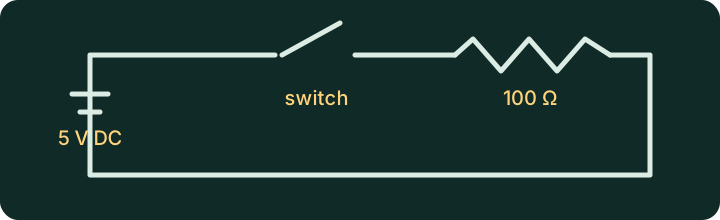
Close the loop
Build one source, one switch, and one load so open and closed paths become visible.
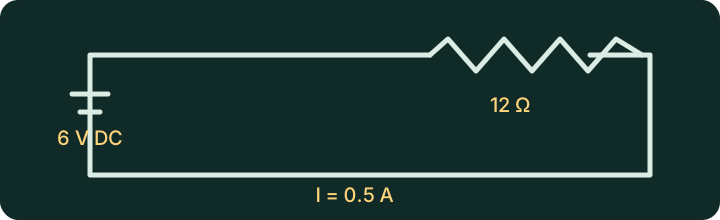
Sweep Ohm's Law
Rebuild the article's 6 V and 12 Ω example, then change one variable at a time.
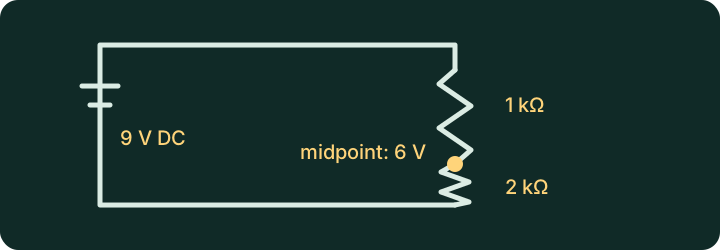
Divide voltage in series
Use two series resistors to see shared current and proportional voltage drops.
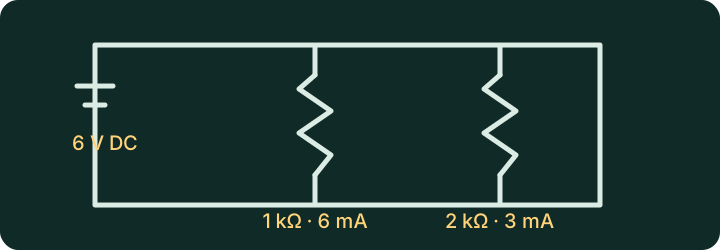
Split current in parallel
Give two branches the same voltage and watch their currents add at the source.
Module 2
See change over time
Use scopes to follow stored energy, alternating signals, and conversion to DC.
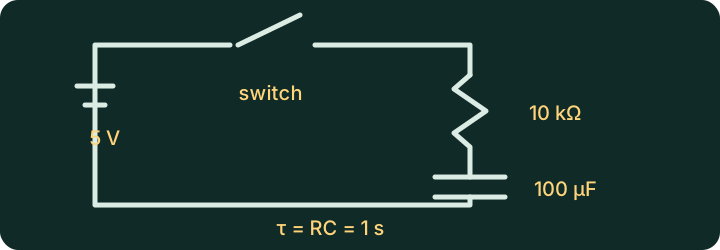
Watch an RC circuit remember
Charge and discharge a capacitor through a resistor while following voltage and current over time.
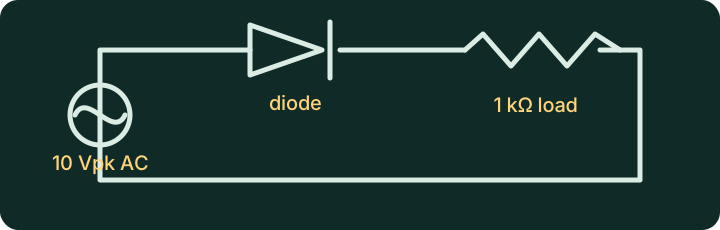
Let one AC half-cycle through
Use one diode to turn a reversing AC waveform into pulsing one-direction output.
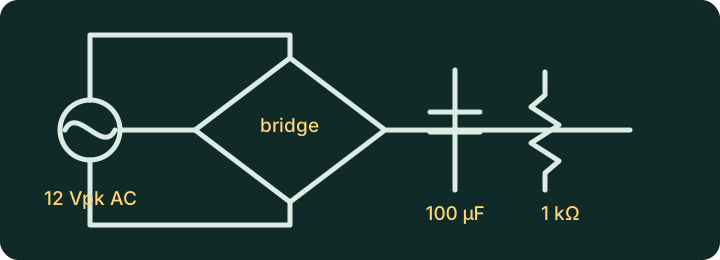
Rectify and smooth AC
Build a bridge rectifier, then use a capacitor to reduce the valleys in its output.
Module 3
See fields and systems
Connect magnetic fields, resonance, transformers, and line loss.
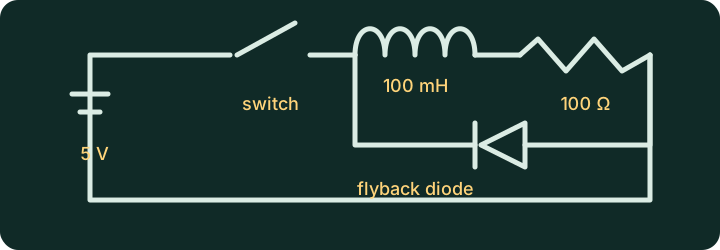
Give inductor current a safe path
Watch an inductor oppose sudden current changes, then add a flyback diode.
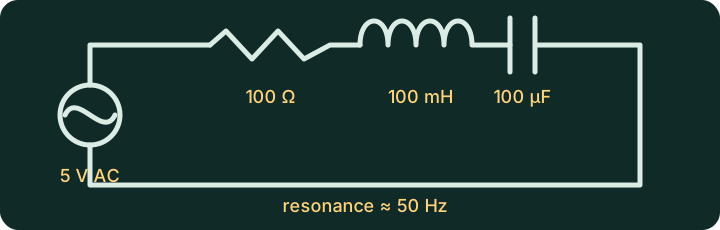
Find series resonance
Sweep an RLC circuit around 50 Hz and watch current peak when energy exchange lines up.
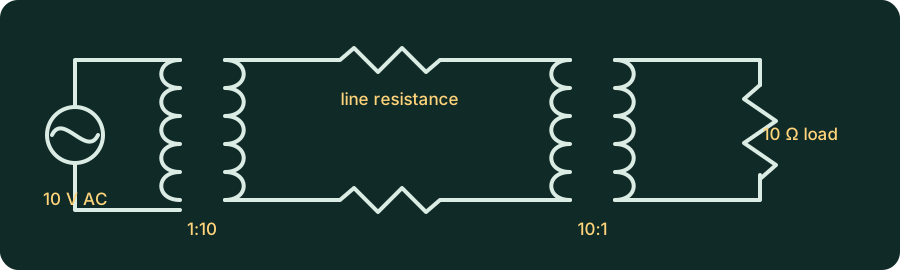
Move power with less line loss
Compare direct and transformed transmission at the same delivered load power.
Safety boundary
Keep this practice inside the simulator.
These are simplified, educational low-voltage models. They are not instructions for mains construction, household wiring, battery-pack work, or selecting real protection settings.